
Pain may travel from the back or hip into the leg.
Information for patients
VBO®Told you need a spinal fusion? There may be another option.
For certain patients with leg pain caused by a pinched nerve, VBO offers an alternative to spinal fusion. Instead of joining two vertebrae (spine bones) together, VBO is designed to create more room for the nerve by working within a single bone of the spine, so your discs can keep moving.

Understanding your symptoms
Leg pain may begin with pressure on a nerve.
Nerves leave the spine through small openings called foramina. When one of these openings narrows, it can place pressure on a nerve. A spine specialist can determine whether that is contributing to your symptoms.
Areas of the leg or foot may feel less sensitive.
Some people describe pins and needles or burning.
Nerve compression may affect strength or function of your leg or foot.
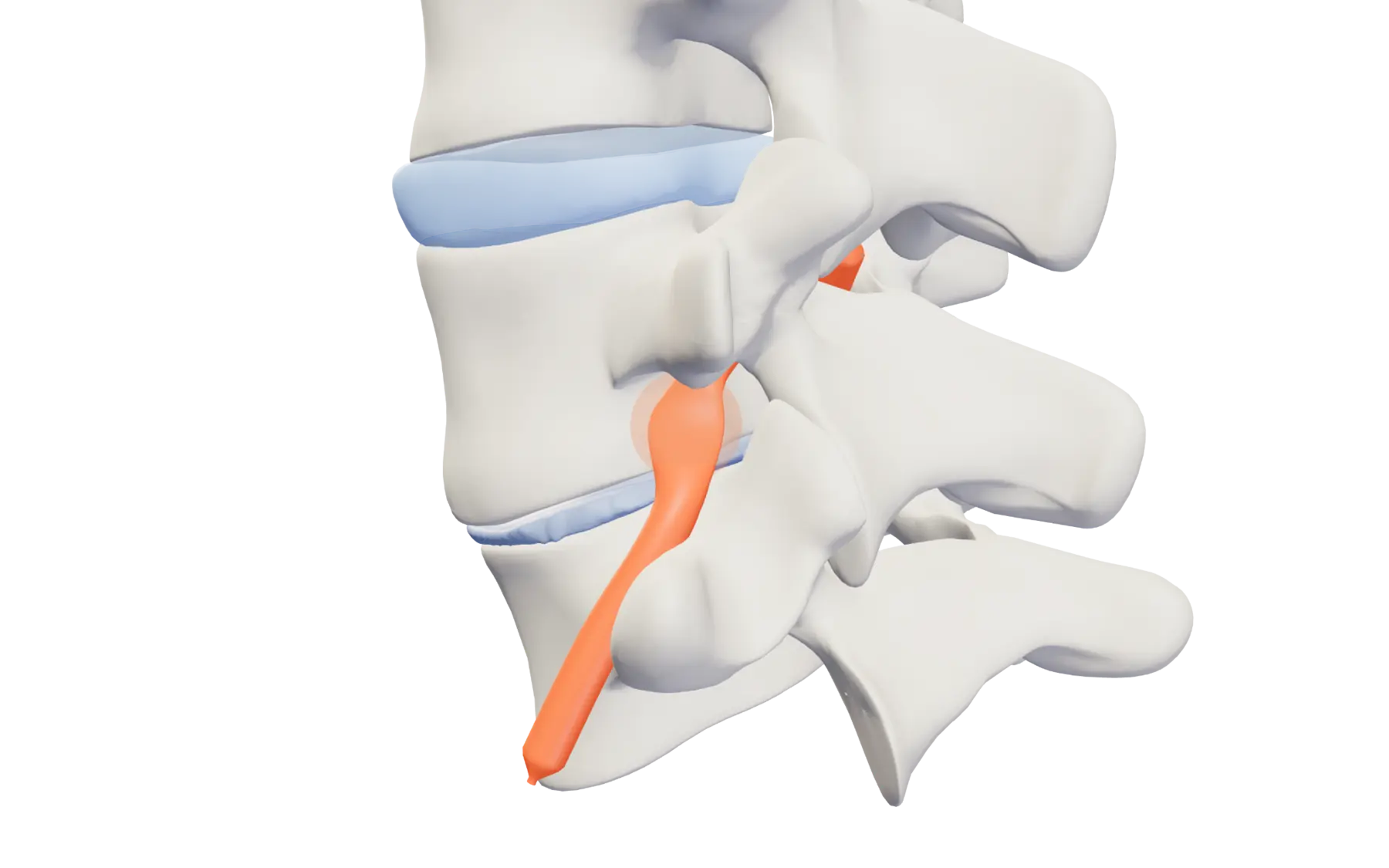 Narrowed opening
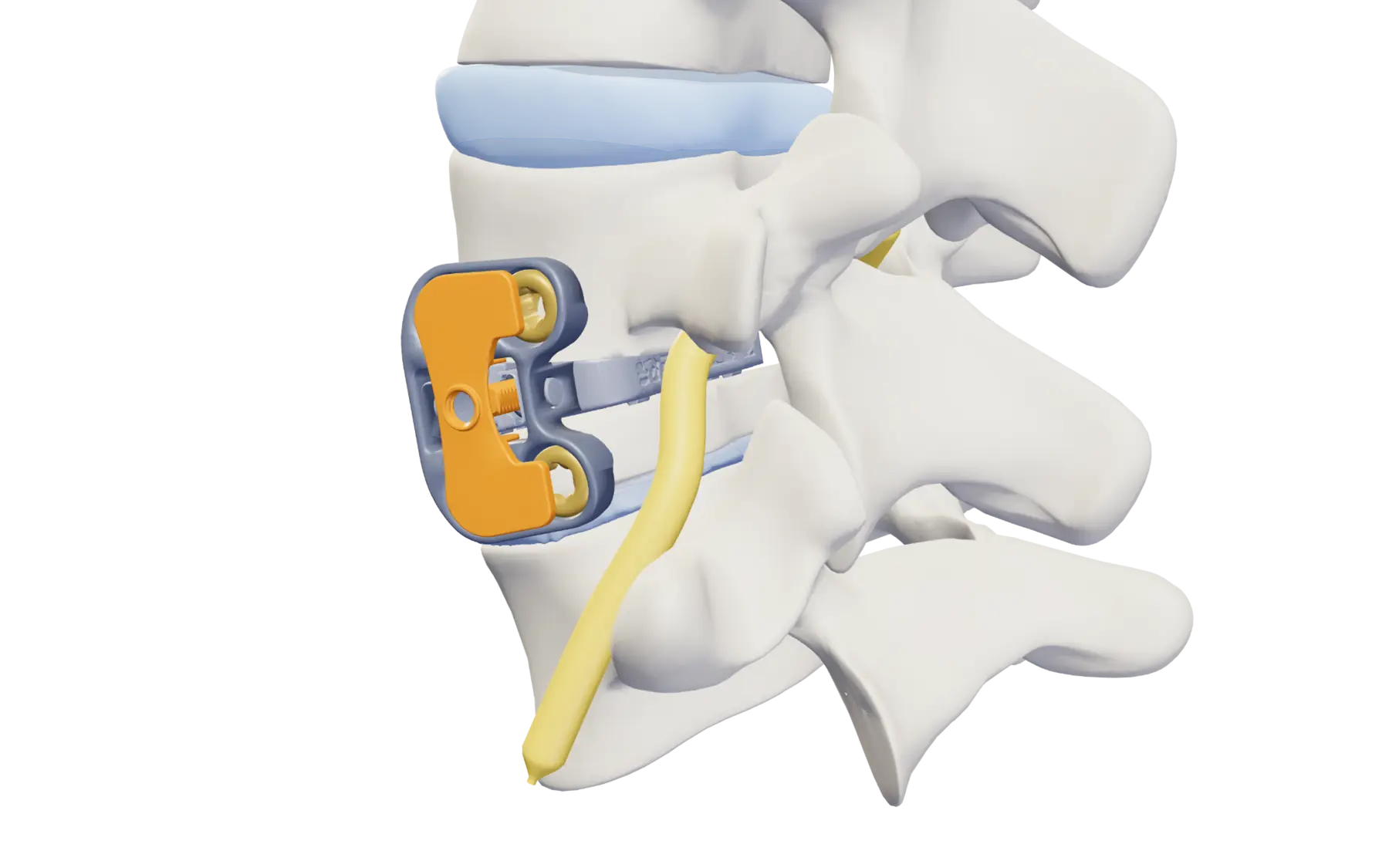 Height restored with VBO
Conceptual illustration for education. Your surgeon will use your symptoms and imaging to evaluate your anatomy.
Why restoring height matters
More height can create more room for the nerve.
Some procedures restore this height by working through the disc space. VBO works differently. The surgeon creates a controlled opening within one vertebra and places the Vertiwedge® implant inside it.
- Height is restored within the treated vertebra
- The Vertiwedge implant holds the restored height in place
- Neighboring vertebrae are not fused together across a disc space
How VBO is different
Healing within one vertebra, not across the disc.
In spinal fusion, two vertebrae are joined together. With VBO, bone heals within the treated vertebra itself, so neighboring vertebrae aren’t joined and the disc between them can keep moving.
Traditional spinal fusion
The surgeon works through a disc space.
The surgeon removes disc material and joins neighboring vertebrae together across that space. Fusion remains an appropriate treatment for many spinal conditions.
VBO
The surgeon works within one vertebra.
The bone is expected to heal across a small opening around the Vertiwedge® implant, while neighboring vertebrae are not joined across the disc.
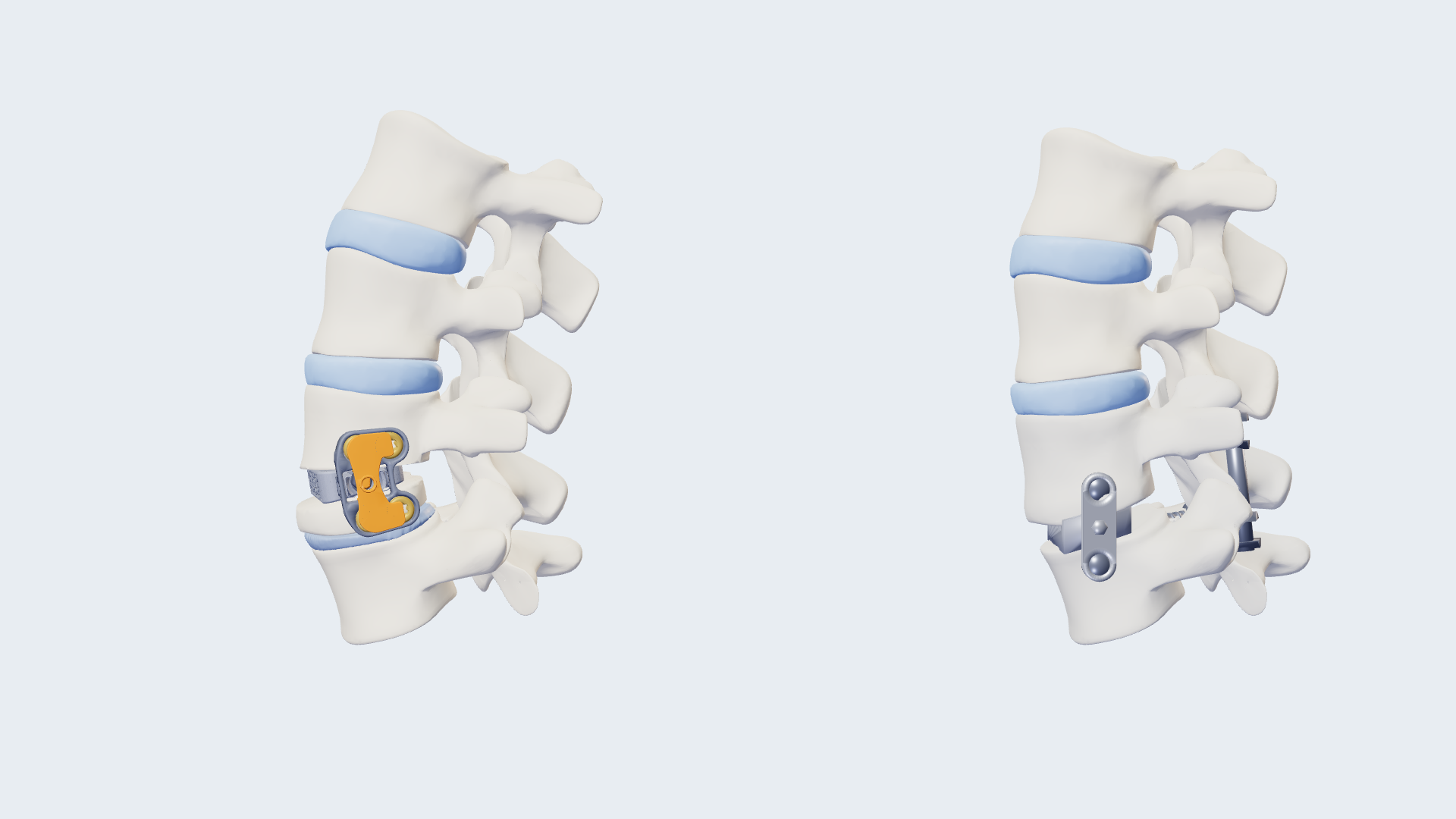
With VBO: the disc can keep moving.
With fusion: two vertebrae are joined and move as one.
What preserving motion means
Designed to preserve the motion you have.
Because VBO doesn’t join vertebrae together, it’s designed to keep your discs moving. Results vary from person to person, and your surgeon can explain what this means for you.
The procedure in plain language
What happens inside the vertebra.
Every operation and recovery is individual. This overview explains the basic purpose of VBO, not what any one patient should expect.
Approach the spine from the side.
The surgeon reaches the treated vertebra through a small incision on the side of your abdomen.
Restore and support height.
Your surgeon creates a small, controlled opening within one vertebra and places the Vertiwedge® implant inside it to restore height. Unlike fusion, nothing is placed in the disc space.
Secure the implant and allow bone to heal.
A small staple and bone screws secure the implant on both sides of the vertebra through the same opening. Over time, the bone is expected to heal around it.

A surgeon’s perspective
“My first VBO patient was clear: no fusion. VBO gave us a way to restore height and relieve pressure on the nerve without fusing the disc.”
Shirvinda Wijesekera, MD
Orthopaedic Spine Surgeon, Connecticut Orthopaedics
Questions and answers
Questions patients ask.
Does VBO involve fusion?
Not in the way most people mean. In spinal fusion, two vertebrae are joined together. With VBO, the treated vertebra heals across a small opening within that one bone, a type of healing doctors sometimes call fusion. Neighboring vertebrae are not joined, so the disc between them is designed to keep moving. You may see the word “fusion” in medical or insurance paperwork for this reason.
Does VBO remove a disc?
No. The Vertiwedge® implant is placed inside one vertebra and does not involve removing or interfering with the nearby discs. VBO also does not fuse the posterior facet joints, leaving them free to continue moving.
How can VBO make more room for a nerve?
Restoring height within the vertebra can increase the space in the opening where the nerve exits the spine.
I’ve been told I need a fusion. Should I ask about VBO?
VBO may be an option for some patients with leg pain caused by a narrowed opening where a nerve exits the spine. Only a spine surgeon can determine whether it’s right for you. It’s reasonable to ask your surgeon whether VBO or other options might apply to your condition.
What if my surgeon recommends a fusion?
VBO isn’t right for everyone. If the disc itself is a major source of your pain, your surgeon may recommend a spinal fusion instead. Foundation Surgical also makes Interwedge®, an FDA-cleared standalone lateral fusion implant. It is designed to be secured with its own fixation through the same side incision, without the separate incision in the back typically used to place additional screws and rods. Your surgeon will decide which approach is appropriate for you.
Will insurance cover VBO?
VBO is billed using established procedure codes. Coverage depends on your insurance plan, so your surgeon’s office can help you check your benefits.
What is recovery like?
Recovery after VBO is generally similar to recovery after spinal fusion, and it varies from person to person. Your surgeon will give you specific guidance on activity, restrictions, and follow-up based on your health and your procedure.
Is Vertiwedge FDA cleared?
Yes. Vertiwedge, the implant used in VBO, is FDA cleared.
What should I ask my surgeon?
Is my leg pain caused by a narrowed opening where the nerve exits my spine? Could VBO be an option for me, and what are the alternatives? What are the risks and benefits of each option? What would recovery look like for me? Have you been trained in VBO?
Is VBO right for me?
Only a spine surgeon trained in VBO can determine whether VBO or another treatment may be appropriate after reviewing your symptoms, imaging, overall health, bone quality, and treatment history. VBO may be considered for some people whose primary complaint is leg pain that travels into the thigh, calf, or foot because of a degenerative spine condition, with little or no disabling back pain. Adequate bone density is also important and may be evaluated with a DEXA or CT scan. If preserving spinal motion is important to you, ask your surgeon how VBO compares with fusion and other options for your condition.
Availability
Find out if VBO is available near you.
Share your location and we’ll let you know whether a surgeon trained in VBO practices in your area, along with next steps. Submitting this form doesn’t determine whether VBO is right for you.